
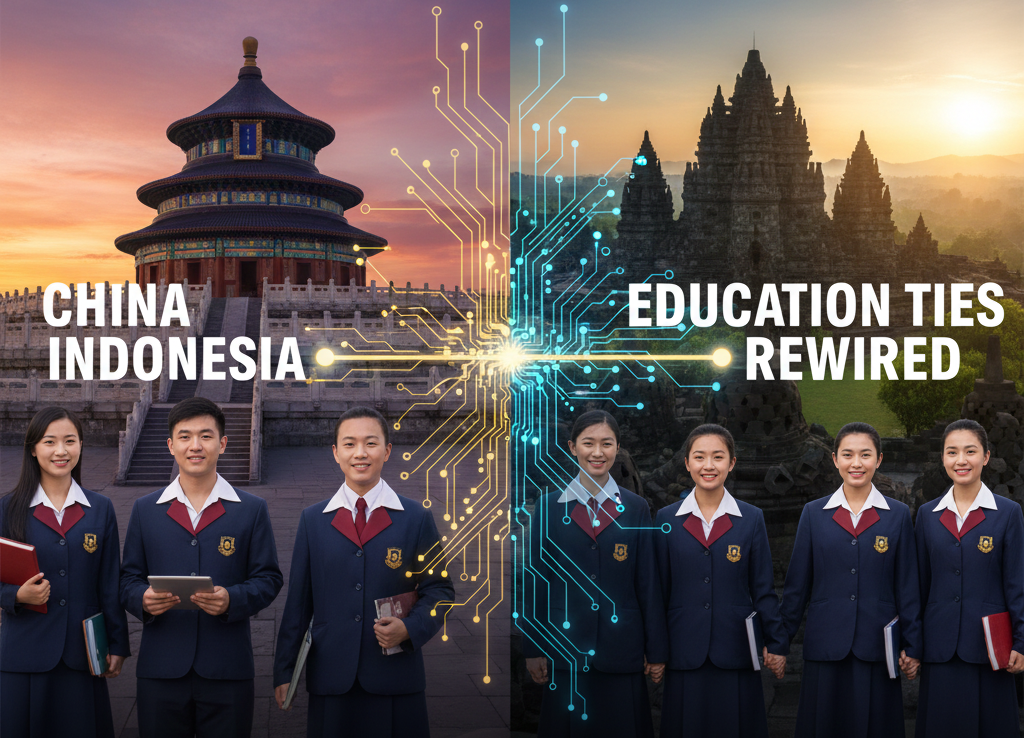

Okay, so 2025. It wasn’t some huge, flashy headline moment, not with all the political fireworks and big money deals grabbing attention. But China and Indonesia? They totally flipped the script on education. Quietly, yeah, but it was a seismic shift. It changed everything for how folks learn and connect around here. Think new policies, tech everywhere, a real embrace of each other’s cultures. This wasn’t just some tweak; it totally reshaped how people get educated, how researchers connect. Pretty awesome, actually.
Backstory: How China & Indonesia Started Thinking Differently
For years, it was all about the economics with China and Indonesia. Big infrastructure, huge projects, the usual. But then 2025 rolled around, and BAM! Both sides started thinking, “Hey, what if we also invested in brains?” It wasn’t just about showing off fancy bridges anymore. It was about real soft power, getting smart together, letting people move around and learn from each other. Makes sense, right? Building mutual trust? Less misunderstandings down the road? Yeah, education became a big deal on their shared agenda.
Why Education Got Serious?
Why the sudden push? A few key things happened:
- Digital explosion: Everyone’s online now. AI, cybersecurity, all that cool stuff. Both countries saw a chance to innovate together. Smart move.
- Students on the move: More Indonesian kids wanted to study tech abroad, and Chinese universities were totally open for international students. A genuine two-way street, you know?
- Regional power play: Southeast Asia’s growing fast. You gotta have smart people to keep up. Simple as that.
The Big Changes in 2025
1. Research Hubs Got Real
Okay, so 2025 saw universities in places like Shanghai, Beijing, Jakarta, and Surabaya team up. Like, really team up. They created these joint research hot spots for stuff that truly matters to both countries: marine conservation, green energy, digital trade security, even regional climate modeling. Serious stuff, right? And it wasn’t just old-school labs either. They set up virtual ones! Researchers collaborating from anywhere. More faculty exchanges. More papers written together. That’s what I call progress.
2. Dual Degrees? Everywhere.
Dual degree programs? Massive. Way easier credit transfers, curriculum stuff all sorted out. Indonesian engineering and marine science students? They got into China’s amazing labs. And guess what? Chinese students got to explore Indonesia’s incredible environmental diversity and fieldwork opportunities. Total win-win.
Look, before 2025, student visas were a headache. So slow. Now? Faster approvals, way more slots available. Research funding used to be mostly single-country. Not anymore! They’re sharing grants, putting in money together. Language training? Used to be an afterthought. Now? It’s a built-in requirement for both sides. And technology access? Forget restricted collaboration tools. Now, shared digital platforms and virtual labs. The whole focus shifted too – from broad and unfocused to really specific, important areas aligned with what each country actually needed.
3. Language & Culture: It Became A Thing
Seriously, language programs became a big deal. Indonesia pumped up its Mandarin language centers across major cities. China? They added more Bahasa Indonesia programs in their big universities. But it wasn’t just rote memorization. This new curriculum focused on proper academic writing, professional talk, understanding the culture—not just words. This made a huge difference. Students were actually prepared to work together, not just parrot phrases. It was about real engagement.
4. A Scholarship Boom
China? More scholarships for Indonesians in STEM, traditional arts, public policy, even international relations. Awesome. But Indonesia also started offering reciprocal scholarships for Chinese students interested in maritime anthropology, forestry, biodiversity, Islamic studies, and digital entrepreneurship. See? This isn’t a one-sided street anymore. It’s balanced. It’s smart.
Tech Changed Everything
AI in the Classroom? You Bet.
One of the coolest things to happen in 2025 was AI. Yep, AI got integrated into these joint programs. Universities experimented with AI tutors, automated translation, real-time classroom analytics. Crazy, right? It meant Indonesian students could easily read Chinese literature and research papers. Chinese universities could better tailor training modules for international students. And faster project coordination across time zones? Yes please. It just broke down all those old, clunky barriers.
Remote Learning Is Here to Stay
And remote learning? It’s not just for emergencies anymore. It’s a permanent, structured part of bilateral education. Rural Indonesian students? They’re learning from Chinese professors without having to travel halfway across the world. And vice versa! It’s cheaper. It’s way more accessible. That’s huge for families, really.
The Backroom Stuff: How Policy Made It Happen
Governments got on board in early 2025. They hammered out these education sector agreements that focused on things like academic transparency, quality assurance, intellectual property protection, and even student welfare standards. Super important stuff. It built trust. It encouraged universities to invest in deeper cooperation. And get this: universities in both countries actually got more freedom to design their own international programs. Meaning they could respond quickly to changing research needs and student interests. What a concept!
So, Who Benefits?
For Indonesia?
- Better access to cutting-edge technology research.
- Loads more scholarship opportunities.
- Improved teacher training programs, which is huge.
- Development of truly bilingual and multicultural learning spots.
- A stronger pipeline of talent for their own industries.
For China?
- Seriously boosted soft-power influence.
- Access to amazing natural labs for environmental and maritime studies.
- Greater cultural understanding of Southeast Asian regions.
- New opportunities for student recruitment.
- Broader regional academic networks.
Not Perfect: The Challenges That Stick Around
- Language Proficiency Gaps — Academic writing in another language is still tough.
- Curriculum Mismatch — Specialized programs are hard to perfectly align.
- Budget Constraints — Not every school can afford high-end tech or long-term exchanges.
- Cultural Adjustment — Students still face social and academic adaptation challenges.
What’s Next? Beyond 2025
More student exchanges, more joint research, and stronger digital credentials systems like blockchain are coming. Private sector partnerships are set to rise. Tech companies, universities, and governments want to build deeper, smarter, more connected ecosystems. Both China and Indonesia want to boost innovation, strengthen soft power, and tighten regional educational influence. Exciting times ahead.
For more insight on educational collaborations in Asia, check out the Asian Development Bank’s page:
FAQs (Quick Hits)
Why the big push for stronger China–Indonesia educational ties in 2025?
Simple. Both nations really wanted to strengthen human capital, their tech game, and long-term regional cooperation.
How have students benefited?
Oh, big time! Improved scholarships, cool digital tools, dual degrees, and expanded language programs.
Are these initiatives just for the big universities?
Nope! Smaller institutions and regional campuses are getting involved too, especially through remote learning.
What fields are getting the most support?
STEM fields, maritime studies, digital innovation, climate science, and cultural studies.
Will educational cooperation just keep expanding?
Absolutely. Projections show ongoing growth in mobility, digital tools, and research hubs.
Check our: Piraeus Port Scholarship Program


