
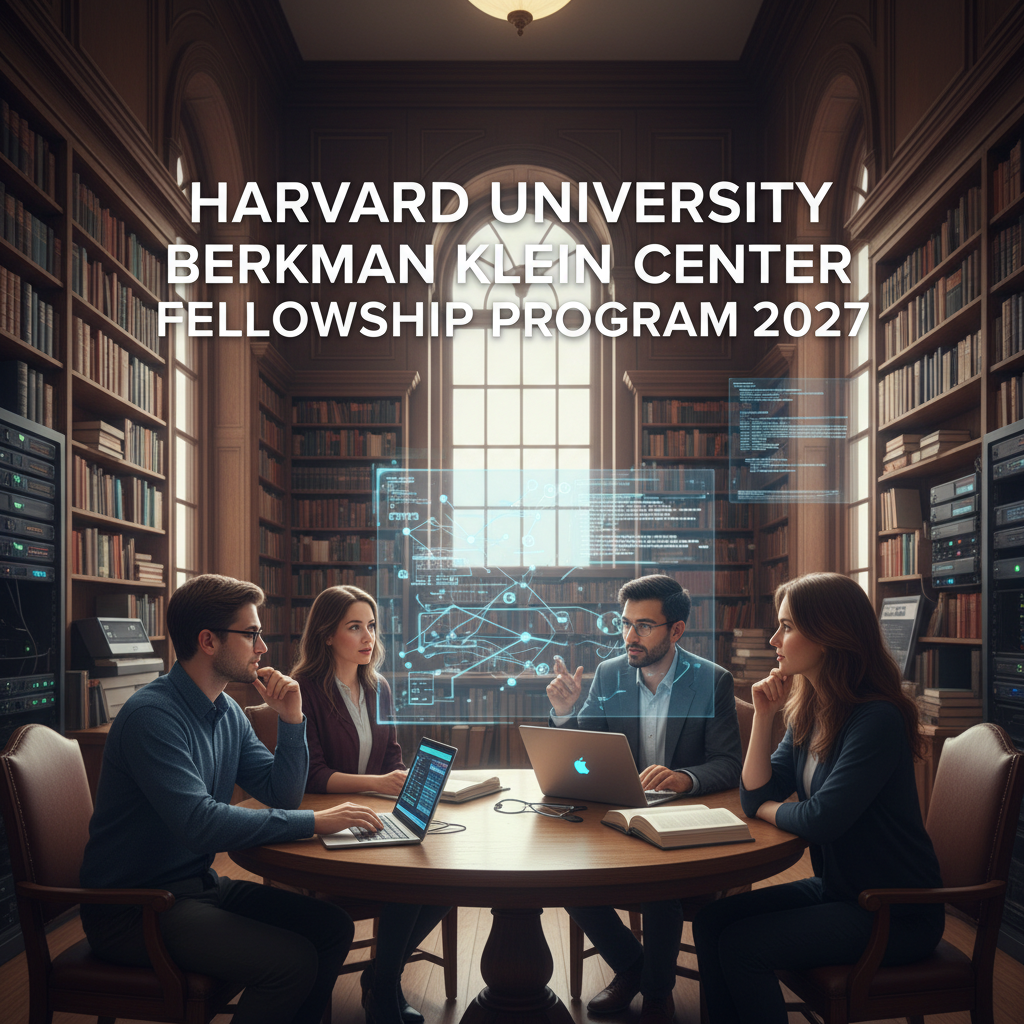

The Berkman Klein Center (BKC) Fellowship at Harvard University is a premier opportunity for scholars, practitioners, and technologists working at the intersection of artificial intelligence, technology, law, ethics, and public policy. Based at Harvard Law School in Cambridge, Massachusetts, this fellowship enables independent, interdisciplinary research that advances the public interest while shaping the governance of AI and digital technologies.
This program welcomes applicants globally, fostering diverse perspectives to tackle complex challenges ranging from legal frameworks of AI to the societal impacts of emerging technologies. Fellows gain access to Harvard’s resources and a unique network of scholars and policymakers.
Degree Levels and Fellowship Types
| Fellowship Type | Description |
|---|---|
| Postdoctoral | Designed for early-career researchers with a PhD or equivalent experience. |
| Doctoral | Open to PhD holders or candidates with substantial research experience. |
| Professional / Practitioner | For policy experts, technologists, and civil society leaders engaged in AI and technology governance. |
Available Research Subjects
The BKC fellowship supports a broad range of interdisciplinary fields, including:
-
Artificial Intelligence Governance
-
Agentic AI
-
Language Model Interpretability
-
AI Ethics and Human Rights
-
Technology & the Law
-
Internet Governance
-
AI Policy and Regulation
-
Benchmarking and Evaluation of AI Systems
-
AI and the Human Experience
Consequently, applicants from technical and non-technical backgrounds can find meaningful research opportunities aligned with the program’s mission.
Fellowship Benefits
The fellowship provides substantial support to enable full dedication to research:
| Benefit | Details |
|---|---|
| Monthly Stipend | Up to USD 6,250 (USD 75,000 annually, depending on funding pathway) |
| Research Resources | Access to Harvard libraries, laboratories, and academic facilities |
| Office Space | Shared space at Berkman Klein Center for in-residence fellows |
| Networking | Collaboration with global scholars, policymakers, and civil society leaders |
| Publications | Opportunities to publish policy briefs, open-source tools, and academic research |
| Courses | Option to audit courses across Harvard University (with instructor permission) |
Moreover, these resources allow fellows to focus entirely on their projects while gaining exposure to leading discussions in AI governance.
Eligibility Criteria
Applicants must demonstrate:
-
Proven experience in research, policy, technology development, academia, or civil society.
-
Strong interest in AI ethics, governance, and societal impacts of technology.
-
Ability to lead an independent research project aligned with the BKC’s priorities.
-
Excellent communication skills for both technical and non-technical audiences.
For Technical Research Applicants
-
PhD in Computer Science or a related field, or equivalent practical experience.
-
Proficiency in Python and AI/ML frameworks such as PyTorch or JAX.
For Non-Technical Applicants
-
Background in law, policy, social sciences, humanities, journalism, or related disciplines.
-
Willingness to engage actively with the BKC community.
Eligible Nationalities
-
Open to applicants worldwide.
-
Harvard provides visa sponsorship for selected international fellows (subject to eligibility).
Application Procedure
Step 1 – Complete Online Application
Submit the fellowship application via the Berkman Klein Center online portal.
Step 2 – Prepare Required Documents
-
CV (PDF format)
-
Cover Letter (1–2 pages) outlining motivation and fit with BKC
-
Project Proposal (2–3 pages) detailing research methods and expected public impact
-
1–3 work samples compiled into a single PDF
-
Contact information for two professional references
Step 3 – Indicate Fellowship Preferences
Specify preferred duration, funding pathway, and residency plan (in-person or remote).
Step 4 – Submit Before Deadline
Ensure all materials are complete. Competitive candidates may be contacted for interviews or additional information.
Furthermore, submitting early increases the chance of consideration for limited fellowship slots.
Why Apply to the Berkman Klein Center Fellowship?
-
Conduct research that directly advances public interest and AI governance.
-
Gain visibility in global debates on AI ethics and digital policy.
-
Access Harvard University’s academic environment and resources.
-
Build a professional network with global scholars, policymakers, and technologists.
As a result, the BKC fellowship is one of the most prestigious programs for researchers at the intersection of technology, law, and society.
Frequently Asked Questions (FAQs)
Is the Berkman Klein Center Fellowship fully funded?
Yes. Fellows receive a monthly stipend (up to USD 6,250), office space, and access to Harvard resources.
Who is eligible for the fellowship?
PhD holders, postdoctoral researchers, and practitioners with experience in technology, policy, or research are eligible.
Can international applicants apply?
Absolutely. The fellowship accepts candidates worldwide, and visa sponsorship is available for qualifying fellows.
What subjects can be researched?
Research can involve AI governance, ethics, internet law, and societal impacts of emerging technologies.
How do I apply?
Submit your application and supporting documents through the Berkman Klein Center online portal before the deadline.
